












Wind energy has become one of the leading producers in renewable energy. There is a never-ending demand for energy and being able to extract clean renewable energy is a very important strategy to combat climate change.
Research suggests fossil fuels have harmful impacts on the environment, and many in opposition of wind farm development believe wind energy contributes as well. For example, habitat loss, disruption to migratory patterns, and simply being unaesthetically pleasing are some of the dislikes those in opposition have. There have been several case studies that focus more on public perception of wind farms, which analyze the attitudes of the public based off multiple social, environmental, and economic variables. This study, however, solely aimed to understand how certain characteristics may influence the development of new wind farms and compare the results across the study regions.
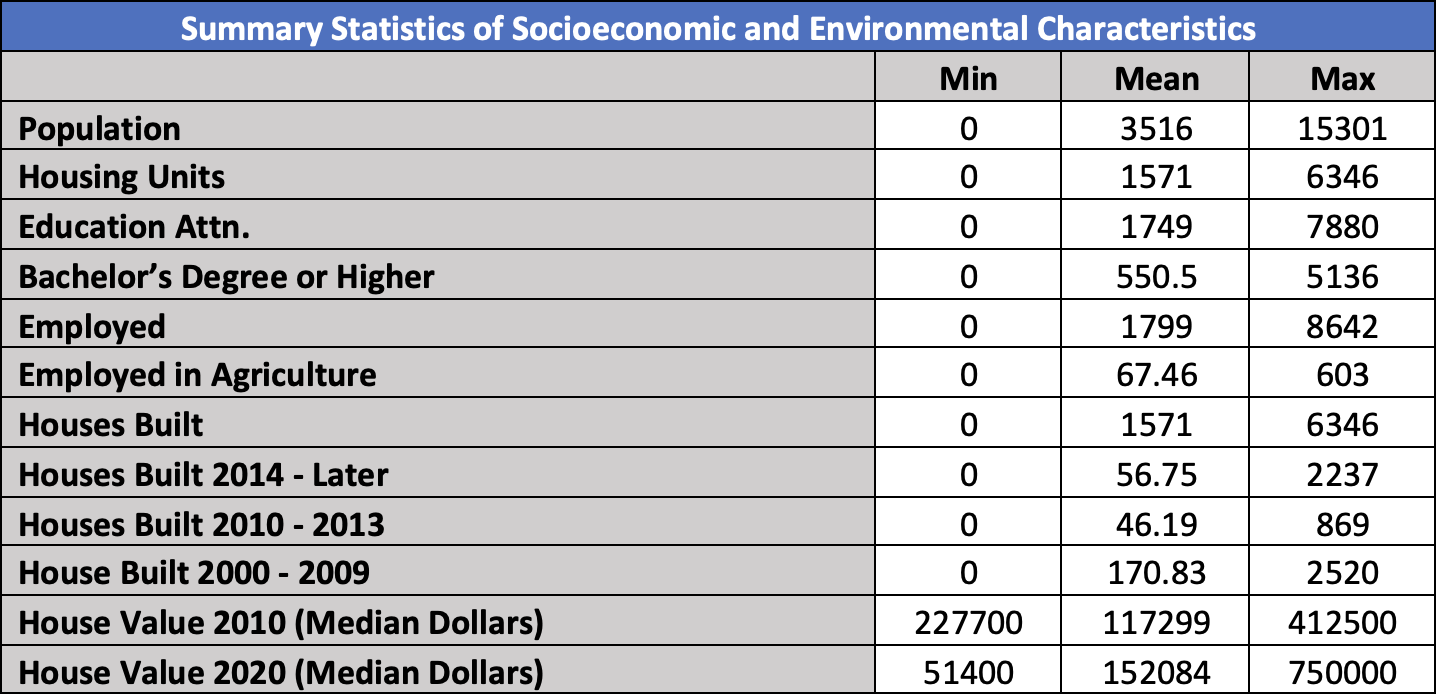
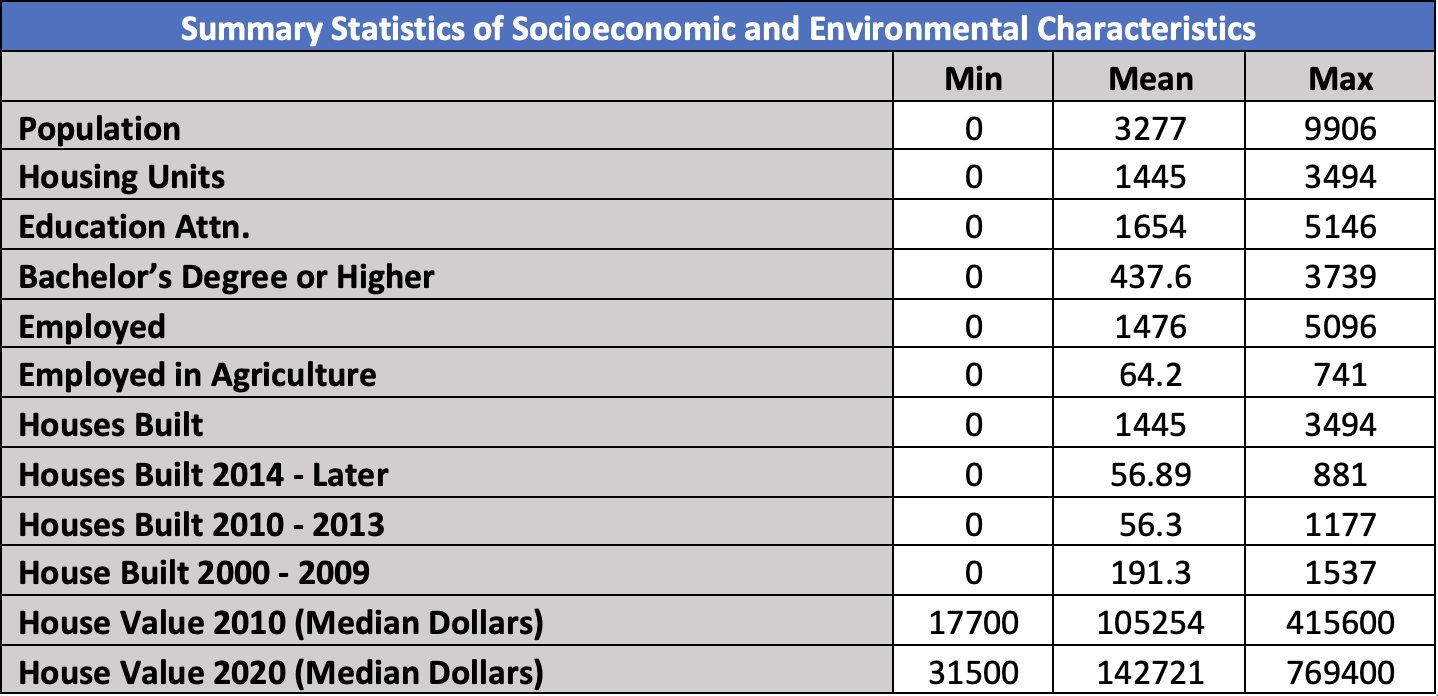
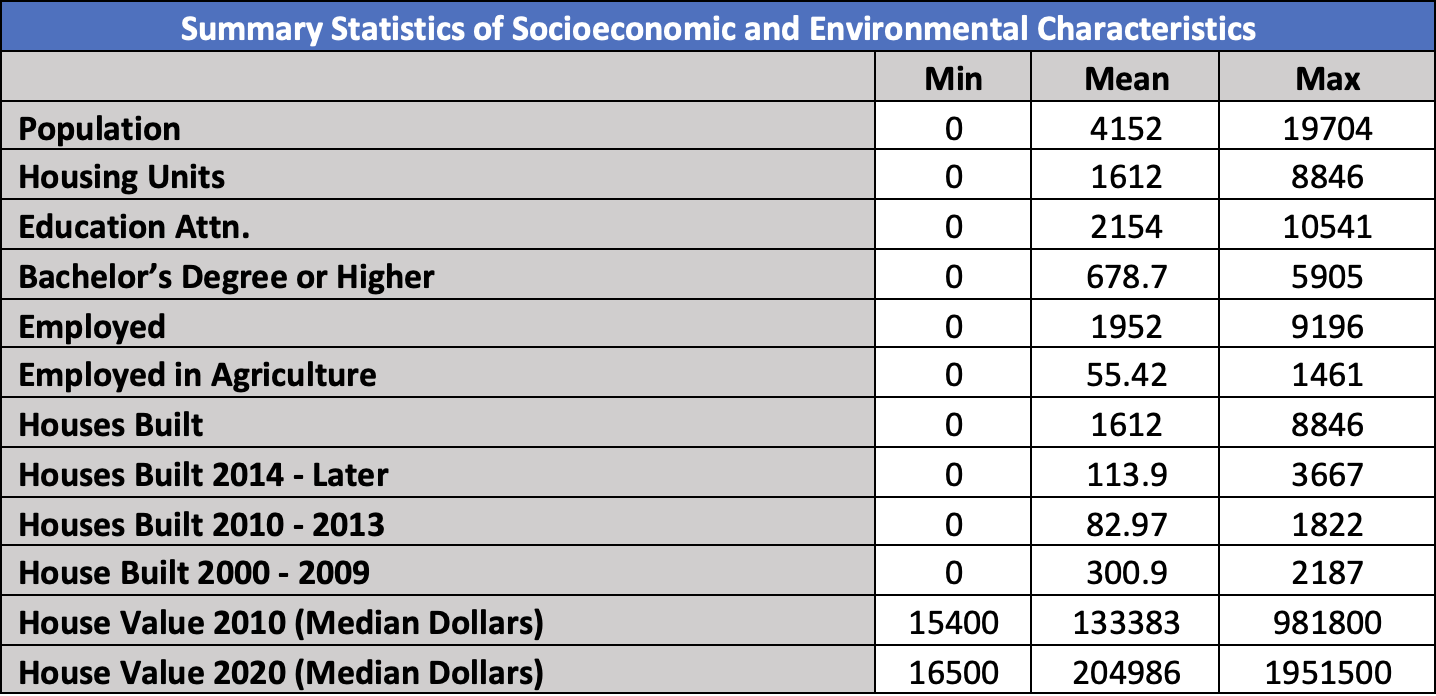
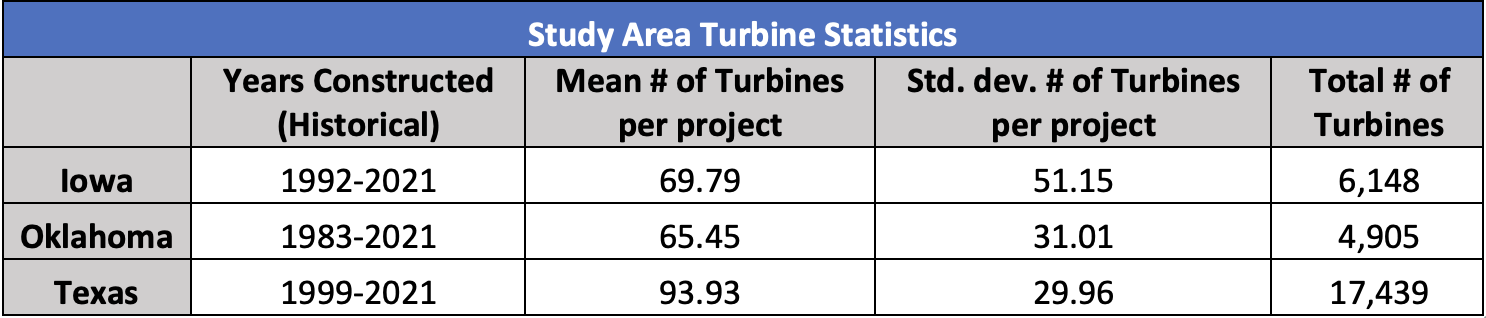
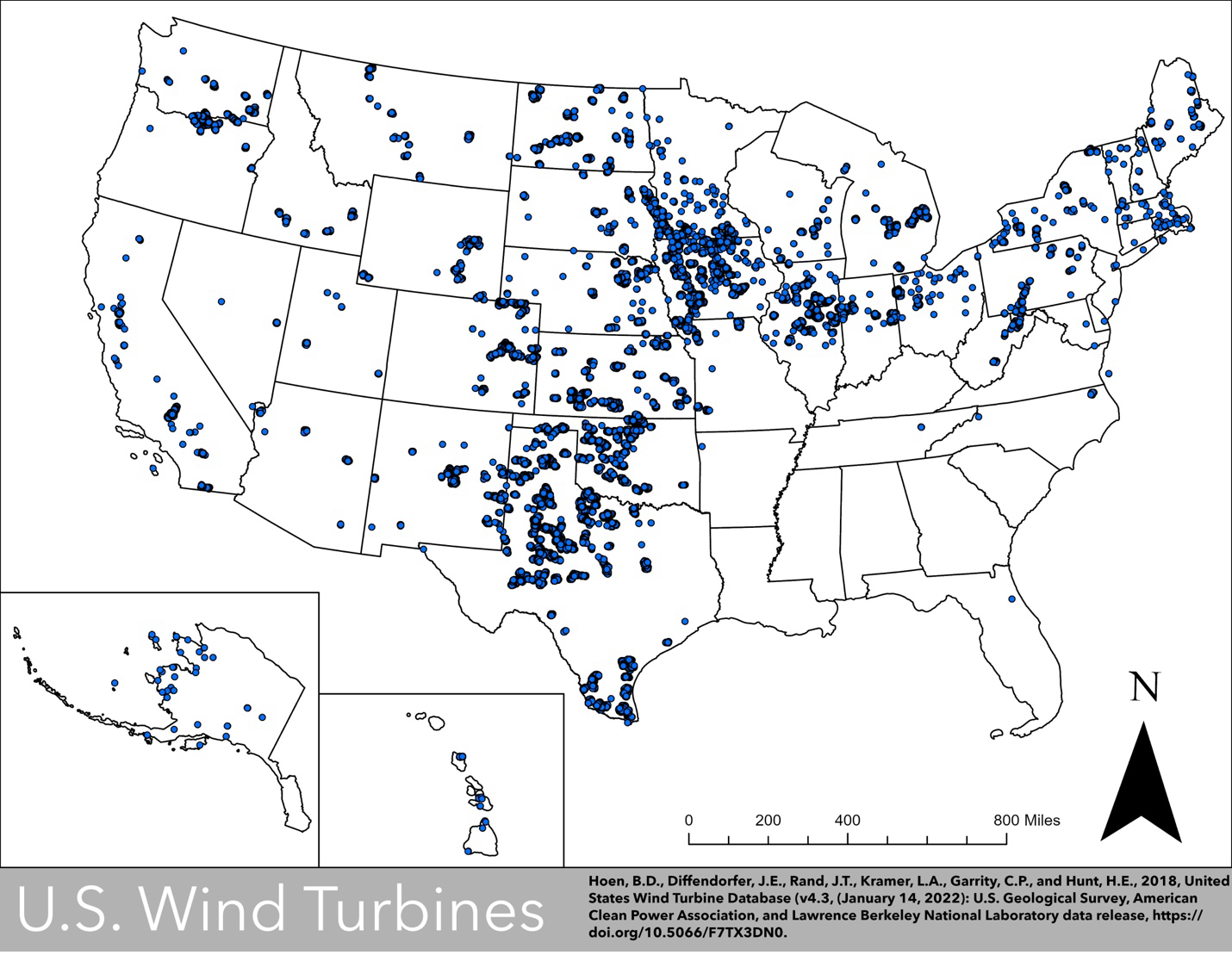
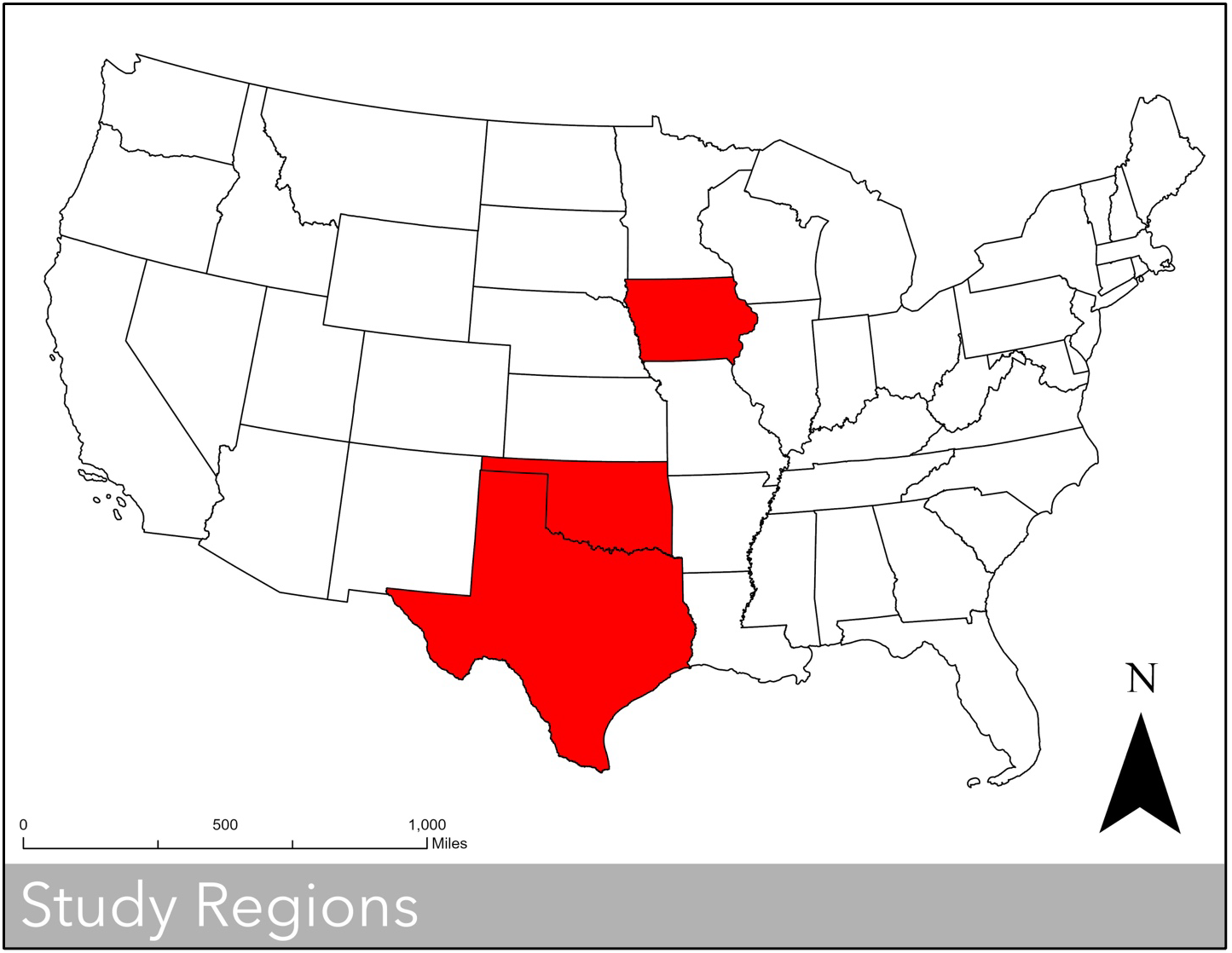
The objective of this study was to analyze twelve different socioeconomic variables and one environmental dataset across Iowa, Oklahoma, and Texas to determine if there are any influences on wind farm development. Additionally, this study will determine if there is spatial clustering among wind farms and whether it’s due to a random process.
The results of this study will show how socioeconomic and environmental characteristics alone don’t provide enough evidence to predict the likelihood of future wind farm development.
While there may be numerous studies addressing the impacts of common factors, these studies tend to only focus on each factor individually. Through a widely used mixed methods approach of geospatial and statistical analysis, this study effectively analyzes combined qualitative and quantitative data pertaining to wind farms and is utilized to evaluate and organize the results (Leech et al., 2010). This type of research will be important in fully understanding what may impact or influence wind farm development apart from public perception.
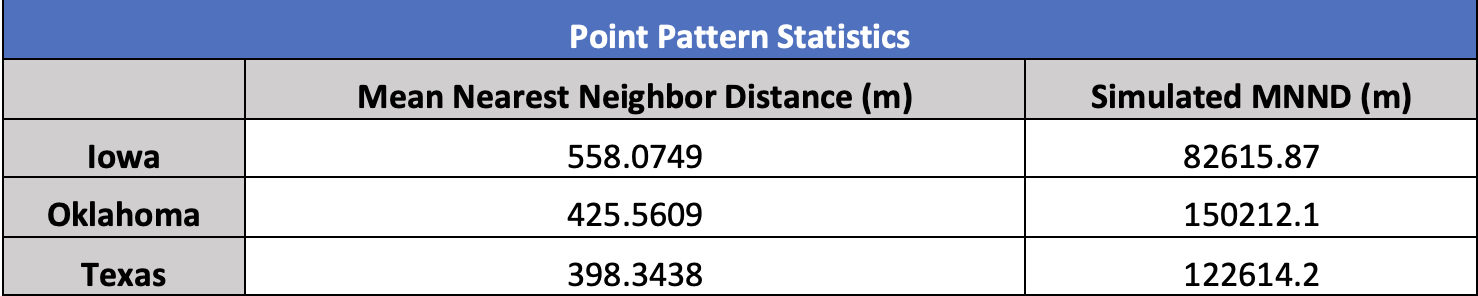
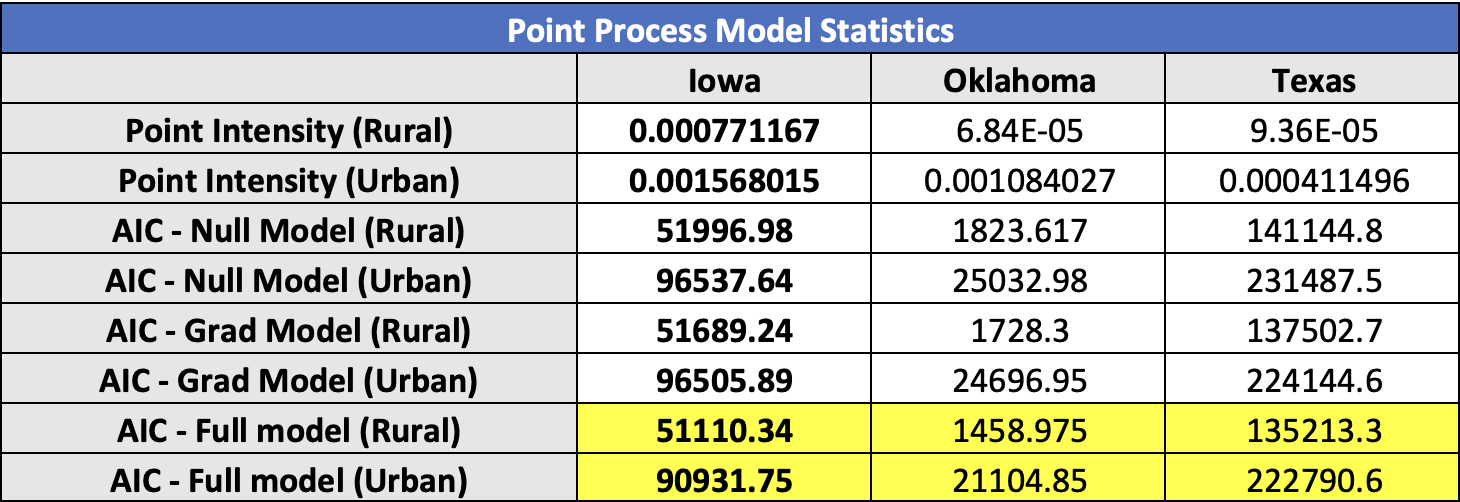
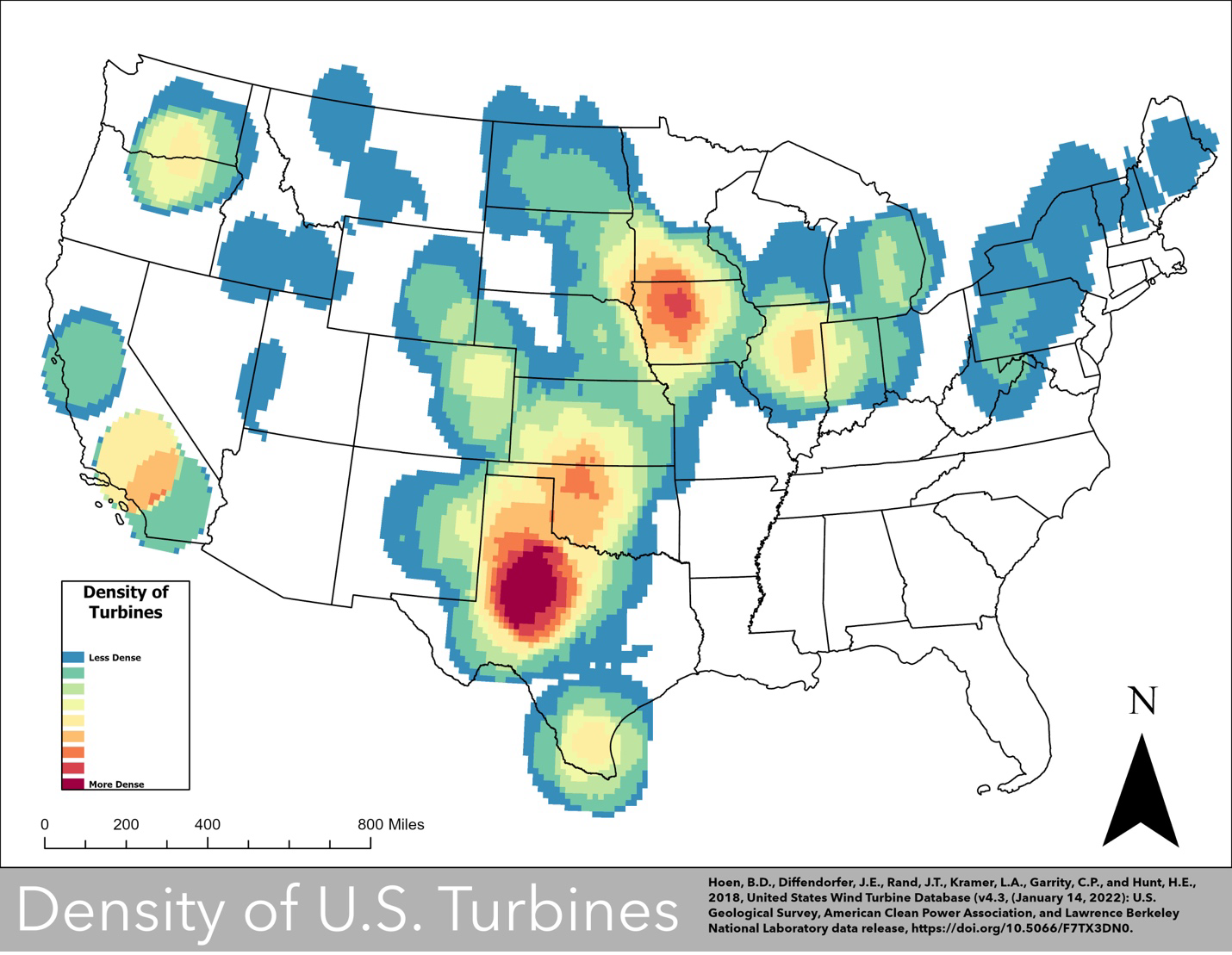
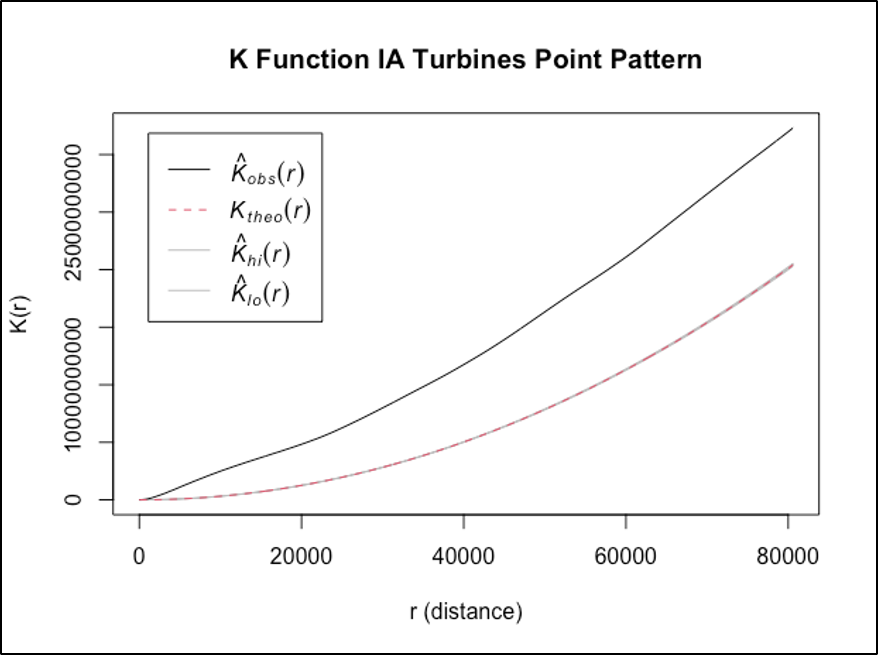
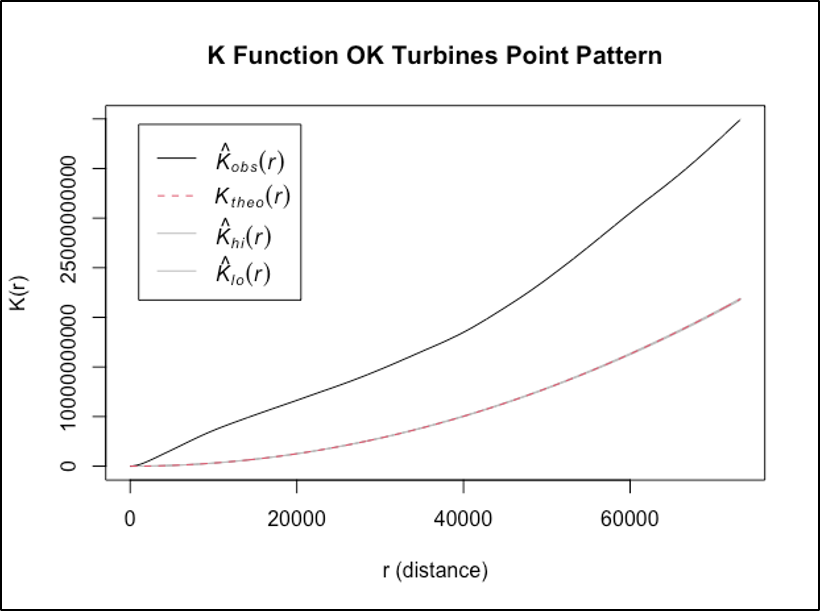
The mixed methods approach consisting of two parts, a geospatial and statistical analysis was utilized to understand the influence socioeconomic and environmental characteristics has on wind farm development. This study revealed that there is spatial clustering of wind farms in each of the study regions. In fact, there is more spatial clustering than expected under the null hypothesis for complete spatial randomness.
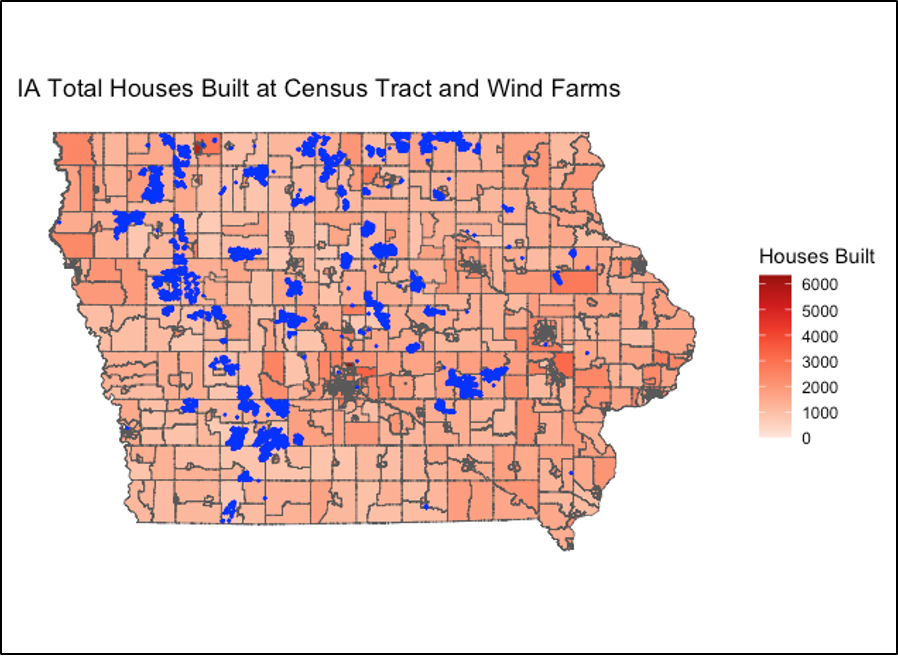
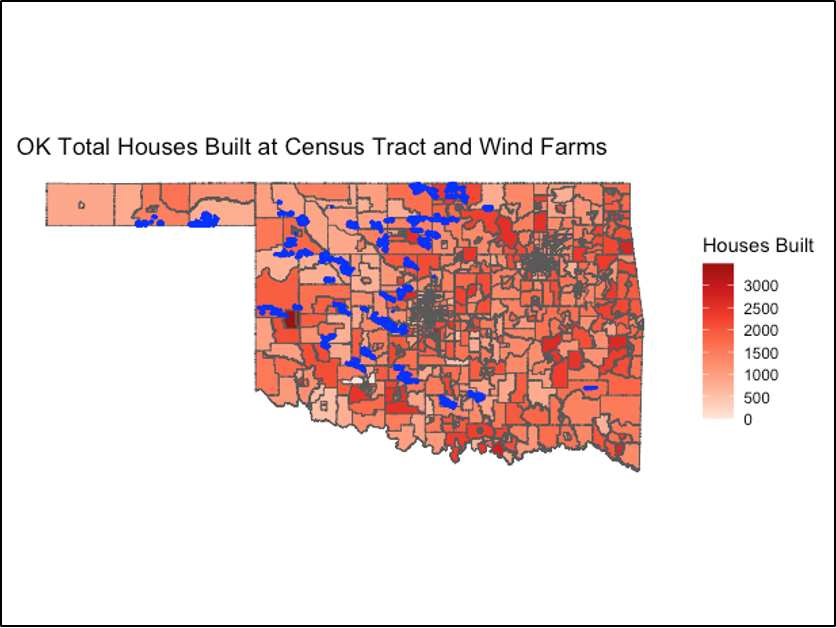
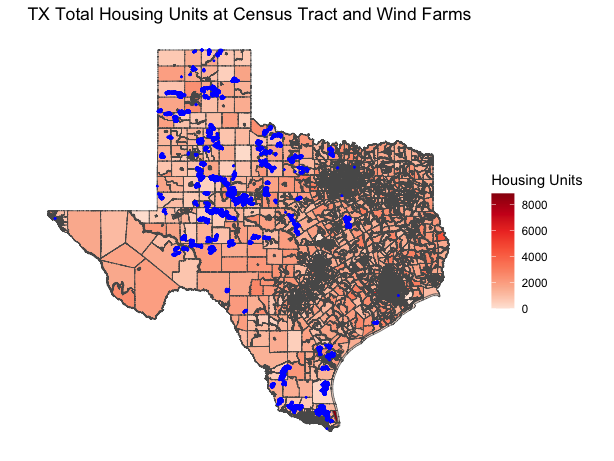
The Monte Carlo simulation on the F function showed that the wind turbines are not clustered randomly and rather there is another spatial process at work. While population and total houses built are two socioeconomic variables that may have had a significant visual pattern as it relates to wind farm clustering, there was no linear relationship across the study regions.
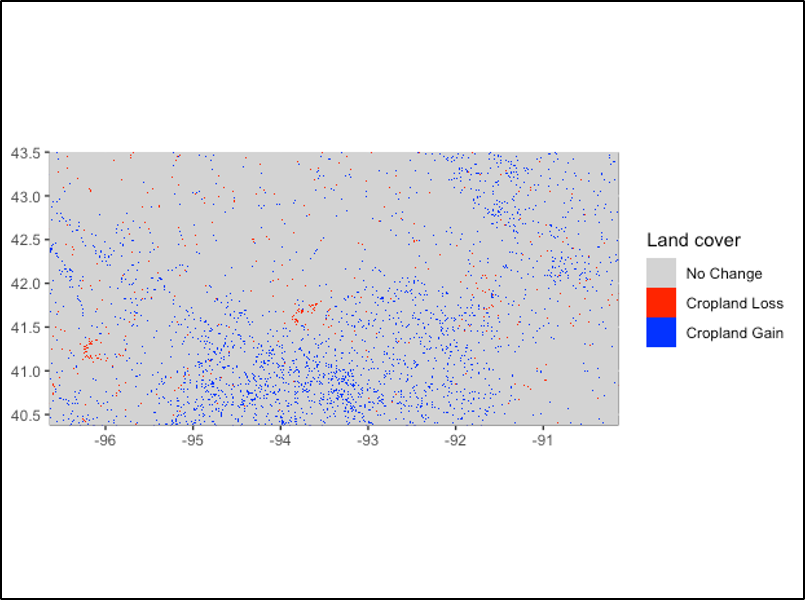
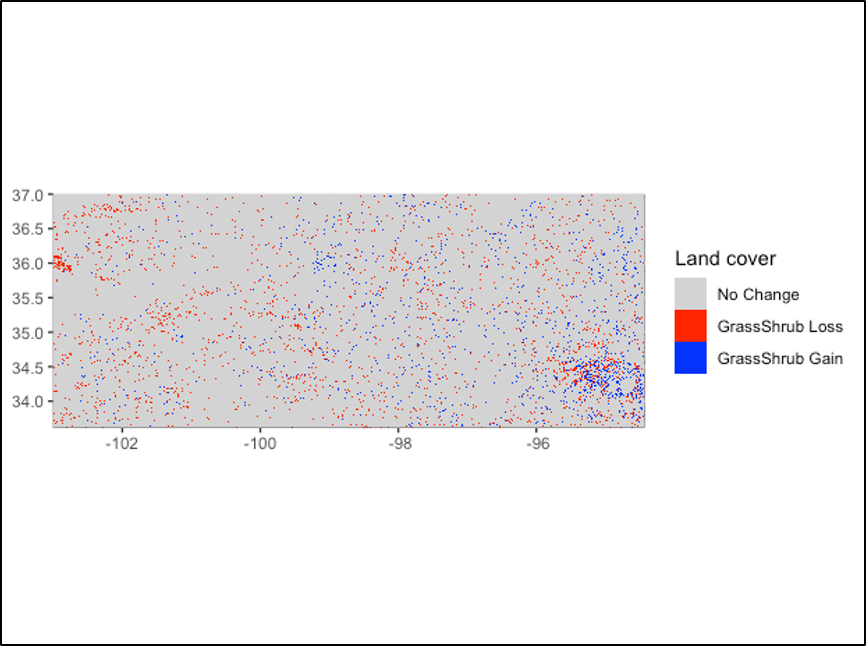
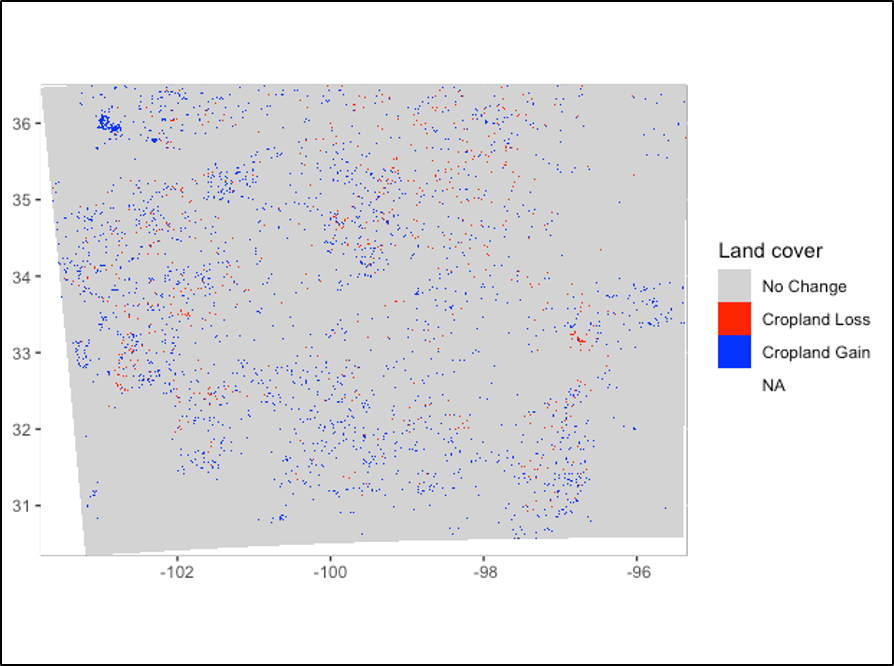
It is clear that a better understanding of the types of 13 socioeconomic variables may prove to be more statistically significant than those analyzed in this study. Land use change over time also didn’t prove to be statistically significant as there were no visual patterns in relation to the wind farms to indicate they had an impact on wind farm development. Additionally, while there has been an increase in House Value in median dollars over time, there is no evidence that shows wind farms have an impact on house prices. Overall, this study obtained clear and concise results that can be used by adjacent communities to better understand the influencing factors on future wind farm development.